

Over the years, several attempts have been made to establish successful 6-hour historic races. The most notable and enduring example is the 6 Hours of Spa Francorchamps, which has been held continuously since 2005 (Covid excepted). This event regularly attracts grids of over 100 cars. Although it is not an FIA-sanctioned race, all participating vehicles must adhere to Appendix K regulations as they apply to their respective historical periods, specifically pre-1966.
The Equipe 6 Hours of Donington
In 2025, Equipe Classic Racing organised the inaugural 6 Hours of Donington. Unlike Spa, cars entering Donington are not necessarily required to comply with Appendix K; instead, they can obtain a certificate confirming compliance with Equipe regulations.
Comparing Circuits: Spa and Donington
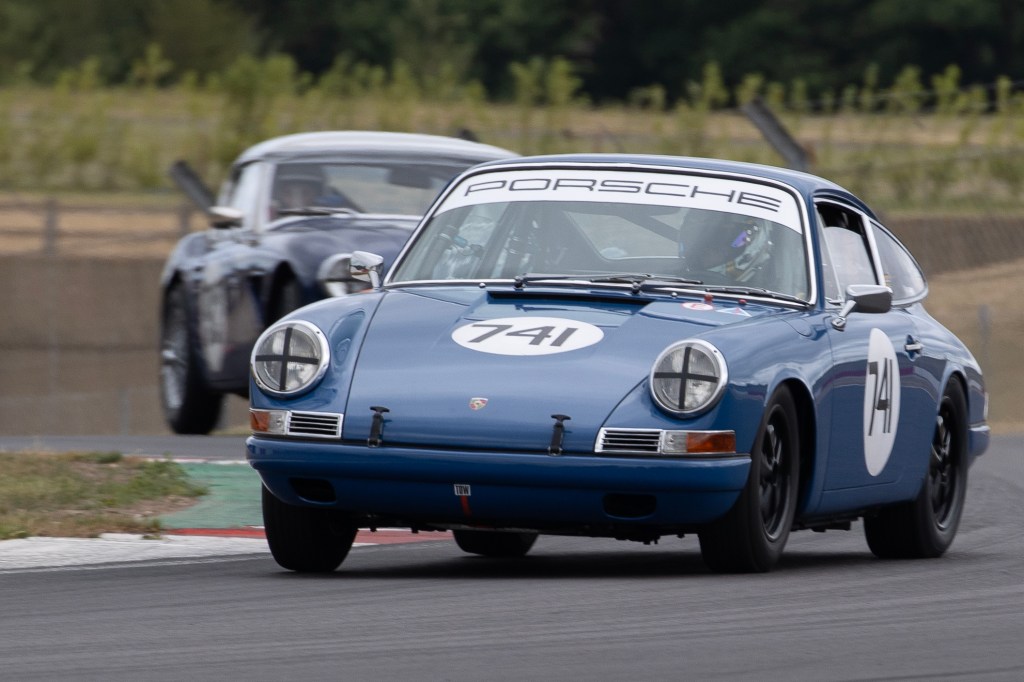
The Spa Francorchamps circuit is a 4.35-mile stretch that encourages high-speed running, except for the Bus Stop and La Source corners. In contrast, Donington, without its Grand Prix loop, presents a 1.9 mile technically challenging series of hills and curves, with only a single lengthy straight. The complexity and frequency of directional changes at Donington mean that effective suspension setup is probably more critical here than at many other tracks.
Entry Restrictions and Notable Cars
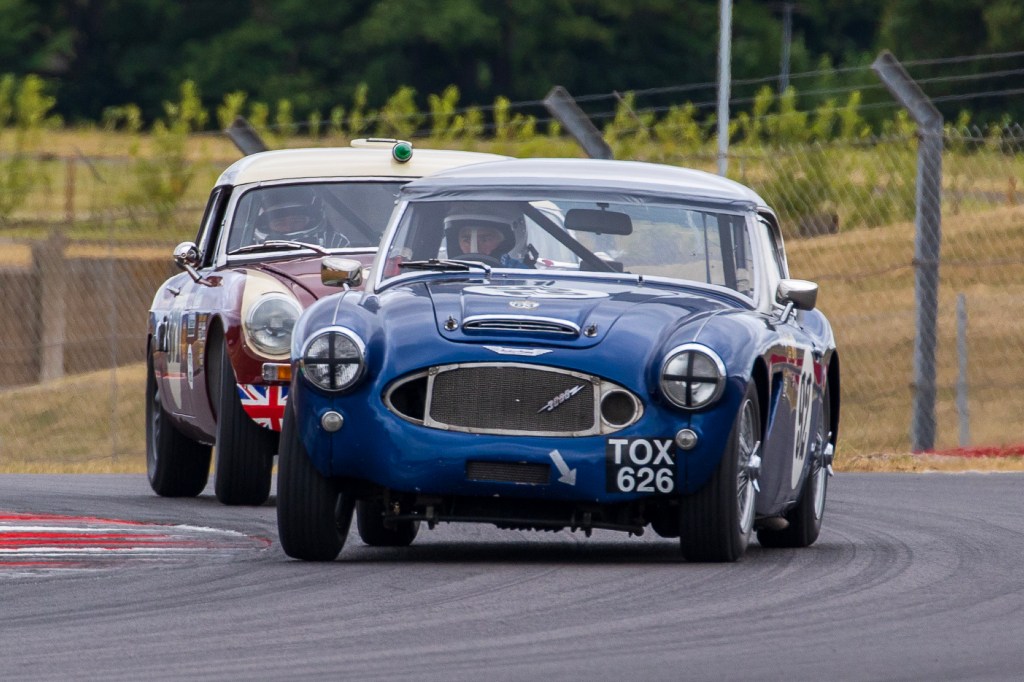
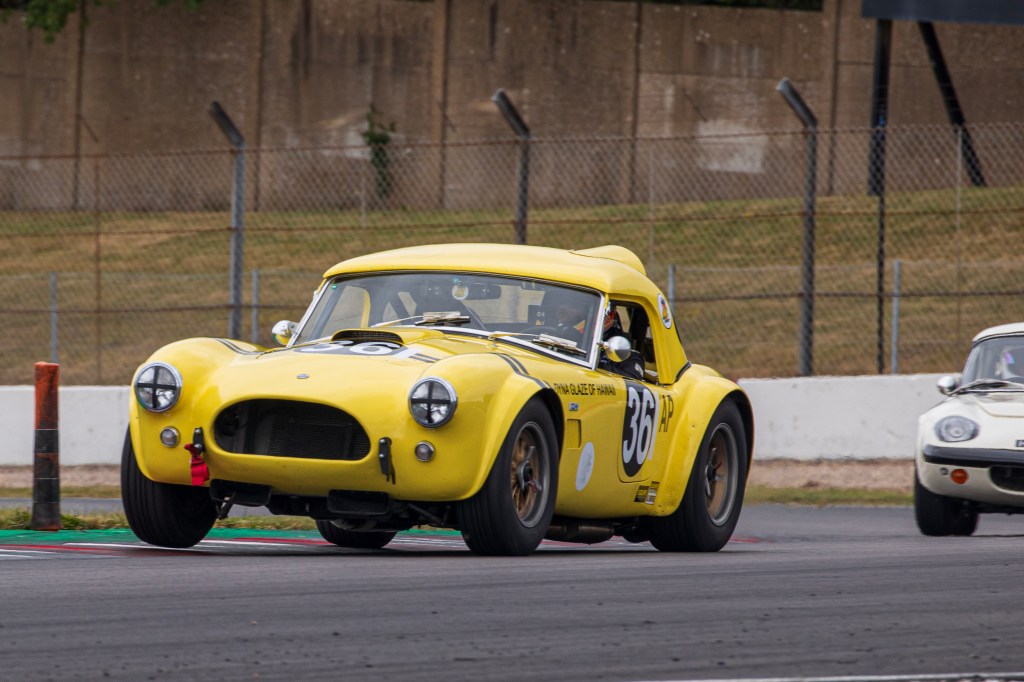
Unlike its Belgian counterpart, the Donington 6 Hours excludes cars such as the GT40 from entry. In 2025, the only ‘big banger’ entries were two AC Cobras. No Jaguar E-Types participated, likely due to a date clash with the Le Mans Classic, which this year however, caters for later vehicles.
Race Format and Strategy
The race requires a minimum of two drivers per car, with each allocated a maximum time behind the wheel. Teams must also refuel safely, necessitating at least one additional member to handle the fire extinguisher during pit stops.
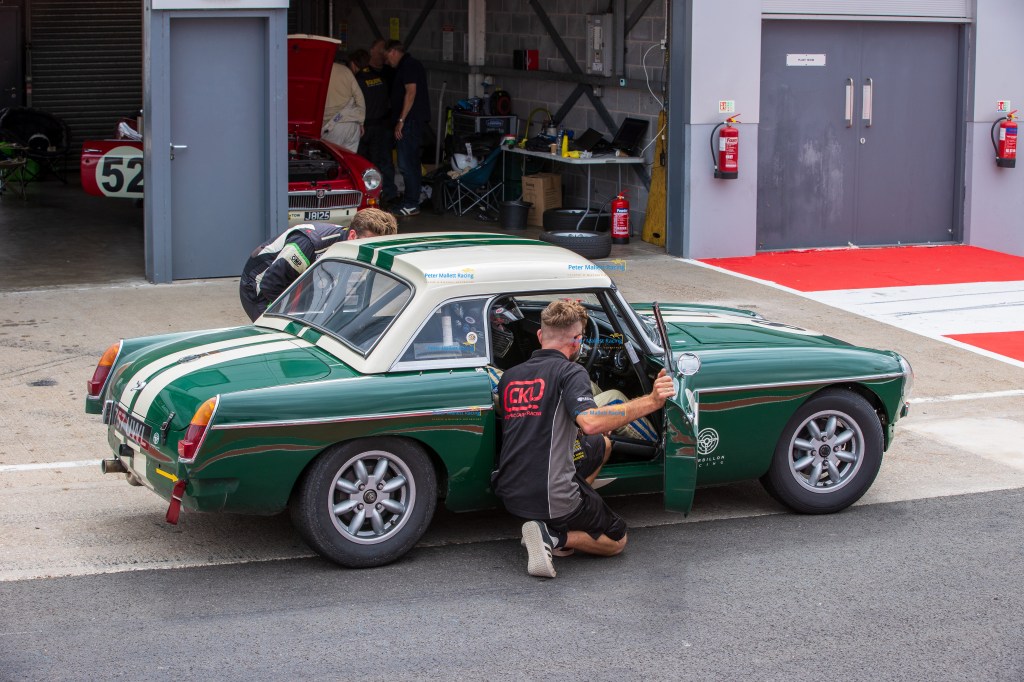
Strategic decisions around fuelling are crucial, whether to fill the tank fully and minimise refuelling stops, or to refuel for each driver change and run lighter, albeit with more frequent stops. Unlike Formula One, most drivers are unlikely to notice the difference between a fully filled tank, and one filled just for a stint.
However, at Donington, the pit stop rules dictate two mandatory fuel stops of 5 mins each which obviously negates any meaningfull fuel strategy. Other than fuel stops, driver changes are only subject to pit lane speed limits etc.
Key to Success at Donington
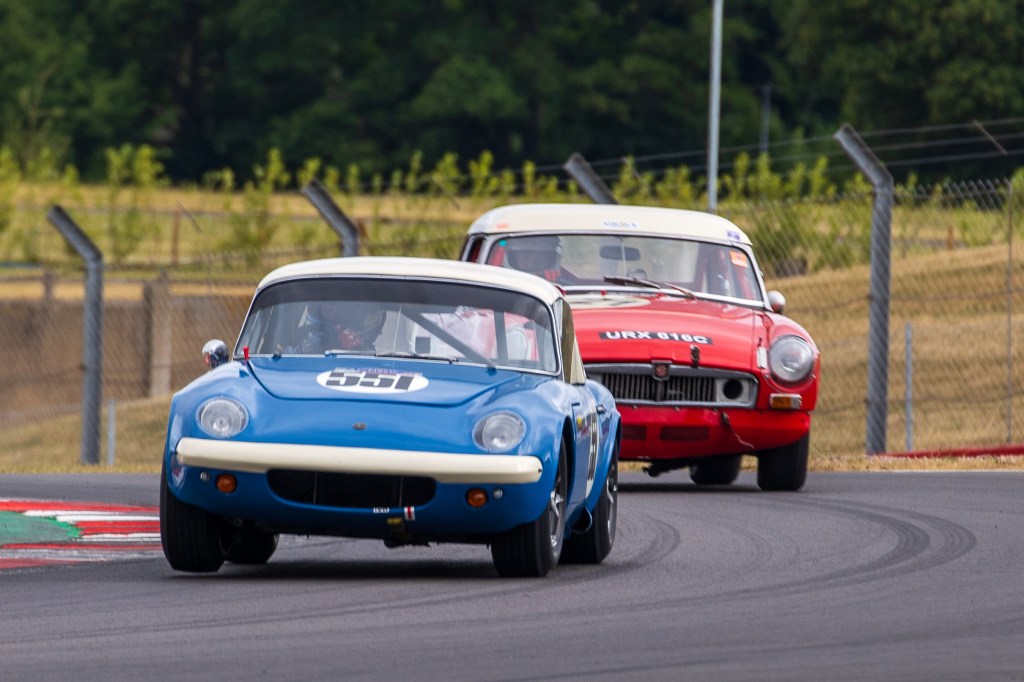
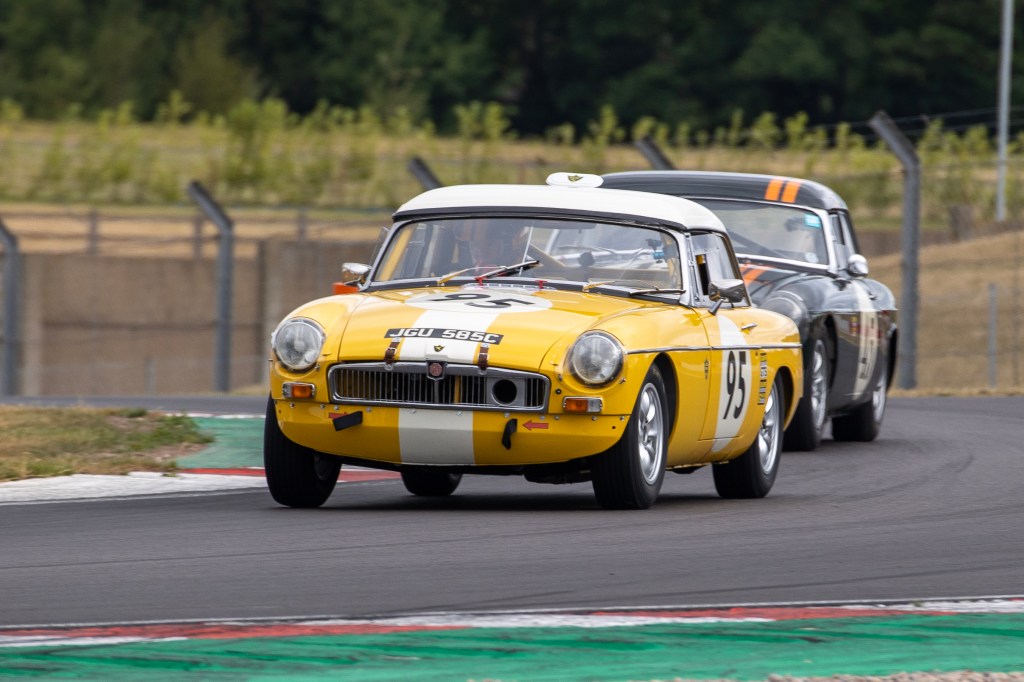
Success at Donington seems to hinge on lightweight cars with powerful, smaller engines. The track configuration, with frequent braking and turning, demands vehicles that can accelerate efficiently and maintain speed through the curves. Lightweight chassis with superior dynamics offer greater fuel efficiency and require less braking, enabling higher sustained speeds throughout the race. Conversely, the long straights and faster curves of Spa permits the big bangers to stretch their legs, until 2025 when against the norm, a Ginetta G4R won overall!
2025 Race Results
The results of the 2025 event reflect the emphasis on lightweight performance. The winning team of Butcher, Tinkler, and Barker drove a Lotus Elan 26R, completing 251 laps at an average speed of 82.68 mph. Close behind, the Tordoff, Dorlin, and Jordan team, also in a Lotus Elan 26R, finished on the same lap with an average speed of 82.46 mph, both competing in the “Pro 2” class. The third-place car, another Lotus Elan 26R piloted by Mooney, Caisley, and Kay, finished ten laps down, averaging 79.2 mph. The only ‘big banger’ in the top six was the Sleep and Montgomery AC Cobra, which secured fourth place at an average speed of 78.67 mph.

Performance of Slower Cars
At the opposite end of the field, the final runner was the Rowley, Bell, and Smith Gilbern GT. Built by the late Mike Bell, this car has competed at Spa and other circuits. With its higher centre of gravity and chassis-mounted body, cornering is more challenging, particularly given its slightly shorter wheelbase. The Gilbern GT finished with an average speed of 62.14 mph, reflecting its dynamic limitations on this demanding track. Worth noting that the team were very happy with the result because, on the basis that to finish first, first you have to finish, the reliability of the Gilbern meant they finished ahead of some pretty quick machinery.

other considerations
Of course it isn’t all plain sailing. Both rain and safety car periods can completely revise a team’s carefully planned race.
Race Etiquette and Safety
The diversity in vehicle performance highlights the importance of race etiquette. Drivers of slower cars must remain vigilant and stick to the racing line, while those in faster vehicles must ensure overtaking is conducted safely. This mutual trust is vital in endurance racing of this nature.
Looking Ahead
The next Equipe Classic Racing 6 Hours of Donington is scheduled for 4th July 2026, with a full programme of support races on 5th July. This event offers enthusiasts the opportunity to experience the excitement of endurance racing without the constraints typical of modern events. For those inspired by the Donington race, attending the historic 6 Hours of Spa Francorchamps at the end of September is highly recommended, offering a glimpse of the pinnacle of historic endurance racing.
Look up Equipe Classic Racing here: https://equipeclassicracing.com/

Feel free to leave a comment and/or share.
All images by Peter Mallett
 Peter Mallett Racing
Leave a comment